
A reader wrote me, “You say in your book Heaven that God will refashion the animal kingdom on the New Earth. But surely you can't believe there will be rats, spiders, and insects, and other creepy animals, such as mosquitoes? That sure wouldn't be Heaven for me!”
Asking how rats and spiders and insects could possibly be on the New Earth is like asking how they possibly could have been in Eden. The point is, they were, and it didn’t diminish Eden, but somehow enhanced it. We’ve never seen insects as they once were, and as they yet will be. (I’ve met some pretty strange and unappealing people, and I’ve been one myself from time to time, but that doesn’t mean people won’t inhabit the New Earth—just that they’ll need to be changed.)
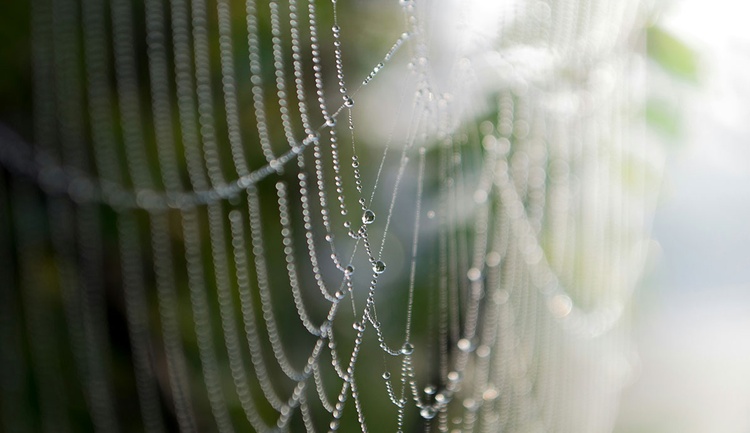
Consider spiders—creatures I admit I rarely appreciate, especially in their larger forms. Yet the intricate designs of their webs reveal something remarkable about them and their Creator.
Spiders operate on instinct, but they adjust web size and spacing to available space, vary thread thickness, and orient webs in response to light and wind. When damage occurs, they repair rather than rebuild, reinforcing weak points and strengthening areas subject to greater impact. No two webs are identical. Spiders are not blind automatons; they exhibit creative adaptability.
Their engineering skills are astonishing. Spider silk, a God-given material that engineers struggle to replicate, absorbs immense impact without breaking and is stronger than steel relative to its weight. Different silks serve different purposes—egg sacs, draglines, and structural support—revealing sophisticated design and purposeful execution.
Spiders also learn from experience, avoiding past failures. Some even create decoy replicas of themselves to deter predators. Remarkably—and this seems more than instinctual—they sometimes appear to sacrifice efficiency in favor of greater aesthetic beauty. If humans behaved this way, we would call it more than instinct, wouldn’t we? Why underestimate their remarkable natures simply because they are small and—in this post-Eden and pre-New Earth world—frightening?
If you encountered a web with its geometric artistry without knowing spiders existed, you would marvel, wondering what human made them, and how. Whether we or spiders themselves appreciate their work, surely their Creator does. I’ve watched sunlight catch a web in a gentle breeze, transforming it into something breathtaking.
“The leopard will lie down with the goat, the calf and the lion and the yearling together; and a little child will lead them. The cow will feed with the bear, their young will lie down together, and the lion will eat straw like the ox. The infant will play near the hole of the cobra, and the young child put his hand into the viper’s nest. They will neither harm nor destroy on all my holy mountain, for the earth will be full of the knowledge of the Lord as the waters cover the sea” (Isaiah 11:6-9).
Mosquitoes? Why not? If lions will no longer be carnivores, which we are told in Isaiah 11 and 65, does this imply that they weren’t originally carnivores? If so, why couldn’t mosquitoes have lived off vegetation rather than living beings, and/or why couldn’t they do so again on the New Earth? We should not mistake all animals’ current behaviors with their original design—think how misleading that would be if we did it with humans.
We often project our current revulsion to certain creatures (e.g. big hairy spiders give me the major creeps) on our eternal state—but this ignores two critical things: they will be changed and we will be changed. They won’t be worthy of revulsion, and we won’t be gripped by revulsion.
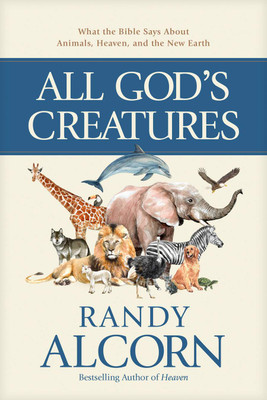
Note from Eternal Perspective Ministries: Preorder Randy's book All God’s Creatures: What the Bible Says About Animals, Heaven, and the New Earth from EPM, and your book will ship by media mail when it releases this fall.