
In Revelation 5:8-10, Heaven’s four worshiping animals (usually translated as “living creatures”) fall down before the Lamb alongside God’s people. John describes how they sing a new song about Christ’s redemptive work:
Worthy is the Lamb who was slaughtered—to receive power and riches
and wisdom and strength
and honor and glory and blessing.(Revelation 5:12)
John then indicates that animals are now praising—or will praise—their Creator in His presence:
Then I heard every creature in heaven and on earth and under the earth and on the sea, and all that is in them, saying:
“To him who sits on the throne and to the Lamb be praise and honor and glory and power, for ever and ever!”
(Revelation 5:13, NIV)
(The word for creature here is ktisma, which clearly means “animals” when it is used in Revelation 8:9).
“Every creature in heaven and on earth and under the earth and on the sea” sings of blessing and honor and glory to God. The addition of “and all that is in them” might seem superfluous, but God intends for us to see that “every creature” couldn’t be more all-encompassing! How many animals? All of them on Earth—land animals, sky animals, and sea animals.
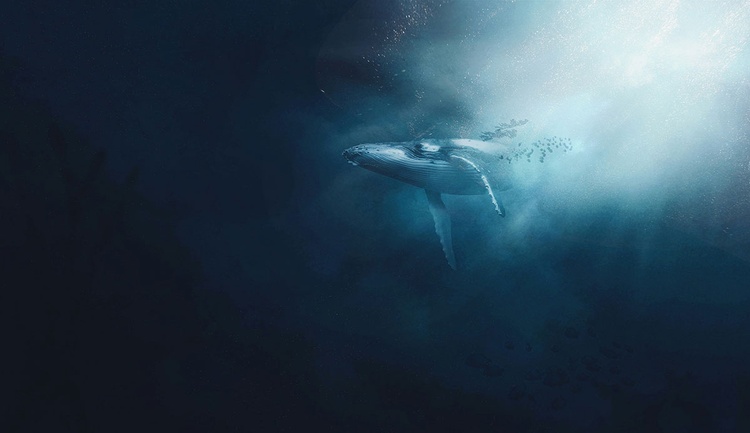
According to Scripture, animals praise God. But animals don’t sing, do they? Well, birds sing and so do whales. (While snorkeling, I’ve heard whales sing for hours at a time, and I worshiped along with them.) Animals really do sing and praise God, but that doesn’t mean we should expect them to sound like us.
How long will all these animals sing praises to God and to Jesus, the Lamb and Lion of God? David writes, “My mouth will speak the praise of the Lord [Yahweh], and let all flesh bless his holy name forever and ever” (Psalm 145:21, ESV). In the Flood account, the Hebrew words translated “all flesh” mean all living beings, including animals and people. Since “all flesh” includes animals, Psalm 145 appears to say that animals will also bless God’s holy name forever and ever.
We may not be able to fully understand these Scriptures, but that isn’t God’s fault. They’ve been in the Bible all along, and their meaning hasn’t changed, even if we don’t fully grasp that meaning.
But this part, at least, seems clear: If animals are praising God on Earth and in Heaven right now, and will praise him “forever and ever” in the world to come, it must mean they will actually live forever and ever in order to do so! What God recognizes as singing may to us be grunting, chirping, croaking, purring, clucking, mooing, or roaring.
Animals don’t worship as we do, but why should they? They’re not human. Their worship of God may be as intuitive as their other God-given instincts—which are different from ours, and in some cases superior. The assumption that something cannot exist in animals simply because we cannot see it says less about the animals’ incapacities than it does our arrogance. Diversity is part of what makes creaturely worship so beautiful and God-glorifying. That it is hard for us to grasp should deepen and broaden our appreciation of God’s greatness.
Elizabeth Johnson, of Fordham University, in a scholarly article titled “Animals’ Praise of God,” looks at the biblical passages and concludes that Scripture depicts “animal praise as a dimension of creation’s praise of God happening in real time, independent of human mediation.” She argues that, in the Bible, “animals’ praise is neither an anthropomorphic projection nor a beautiful fiction, but a real action that occurs in real time.”
The animals God created actively praise and honor Him, despite our inability to recognize it. Indeed, Psalm 148 commands all creation, animals included, to praise the Lord:
Praise Yah!
Praise Yahweh from the heavens . . . Praise Him, all His angels . . .
Praise Yahweh from the earth, Sea monsters and all deeps . . . Beasts and all cattle;
Creeping things and winged bird. . . .
Let them [both animals and people] praise the name of Yahweh, For His name alone is set on high;
His splendor is above earth and heaven.
Psalm 148:1-2 , 7, 10, 13, LSB
God commands praise from the great sea creatures in the depths of the ocean—some never before seen by human eyes. Don’t miss what would be an outrageous claim if not for the fact that Scripture itself reveals it—“sea monsters,” creatures of unknown size and strength are right now in remote ocean reaches praising God. And their Creator hears them and gladly receives their praise. (Don’t take this as my particular interpretation—look at what the passage itself says.)
I believe a proper reading of Scripture makes the notion of an eternal kingdom on the New Earth without animals impossible to believe. God’s cure for this broken world will not fail. When the earth is filled with the knowledge of Him, all God’s creatures—great and small—will worship Him forever with grateful delight alongside His children!
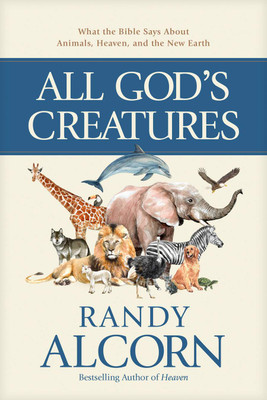
Excerpted from All God’s Creatures: What the Bible Says About Animals, Heaven, and the New Earth, coming November 17 and available for preorder from EPM.