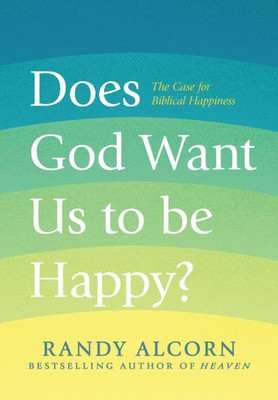

G. K. Chesterton (1874–1936) has been widely credited with saying, “Jesus promised His disciples three things—that they would be completely fearless, absurdly happy, and in constant trouble.” It might be argued that most Western Christians aren’t any of these three—least of all “absurdly happy.”
Christianity is perceived to be about tradition and morality, not happiness. I’ve taught college courses on biblical ethics, and I make no apologies for believing in morality. But some Christians, in the name of moral obligation, go around with frowns on their faces, dutifully living a paint-by-numbers religious existence and proudly refraining from what “lesser” people do to be happy. They seem to wear their displeasure as a badge of honor.
Ironically, the church has given unbelievers reason to fear that becoming a Christian will result in their unhappiness. They’ve known—as many of us churchgoers have also known—professing Christians who go out of their way to promote misery, not gladness. I’ve seen Bible-believing, Christ-centered people post thoughts on a blog or on social media only to receive a string of outraged responses from people who wield Scripture verses like pickaxes, swiftly condemning the slightest hint of a viewpoint they consider suspicious. If I were an unbeliever reading such responses, I certainly wouldn’t be drawn to the Christian faith.
I wonder why it’s not immediately recognized by those engaging in such behavior that what they’re doing is utterly contrary to the faith they profess and the Bible they believe. How is it that perpetual disdain, suspicion, unkindness, and hostility are seen as taking the spiritual high ground? Perhaps the message that Christians shouldn’t be happy has really been taken to heart!
Curmudgeonly Christianity abounds. Some professing Christians feel morally superior to those who engage with culture, and as a result, they major on making world-condemning judgments. They proudly abstain from laughter. They assume that barbecues and ball games are the spawn of sin. Grim-faced pharisaical “Christians” make Satan’s propaganda campaign far easier by undermining the Good News and promoting a negative view of happiness.
Who would ever be drawn to the worldview of decidedly unhappy people? Consider satirist and journalist H. L. Mencken’s (1880–1956) definition of Puritanism: “the haunting fear that someone, somewhere, may be happy.” (On the contrary, Puritans, judging by their writings, were some of the happiest people who have ever lived! Considerably happier, judging by his writings, than H. L. Mencken.)
In most unbelievers’ perceptions, Christianity hasn’t brought much joy to the world. As a religion, it’s primarily known for its rules, self-righteousness, and intolerance—none of which convey gladness and merriment.
This is not the whole story, of course. Throughout history, the Christian worldview has accounted for happiness-generating developments such as hospitals and schools, science and industry, music, drama, and the arts. And on a more personal level, nearly every community includes people with quiet confidence in Christ who are extraordinarily loving, kind, helpful, and cheerful. They gladly give of their time and money to those in need. Such people are rarely in the public eye, but they certainly exist. Sadly, however, to many people, they seem to be the exception rather than the rule.
Thomas Aquinas (1225–1274) wrote, “Man is unable not to wish to be happy.” This means that all attempts by Christians to disregard or demean happiness are misguided and unfruitful. By creating distance between the gospel and happiness, we send the unbiblical (and historically ungrounded) message that the Christian faith is dull and dreary.
Let’s speak against sin but hold up Christ as the happiness everyone longs for. If we don’t, then we will assure our own unhappiness and feed the world’s perception that Christianity takes away happiness instead of bringing it.
Holy Spirit, please remove from me anything that would turn someone away from you. Please fill me so full of yourself that your happiness spills over onto everyone I meet today. Thank you that in your presence there is fullness of joy. And whenever I lack that joy, please draw me back to your presence for a refill.